
How to Reduce Basketball Turnovers with Stats Tracking
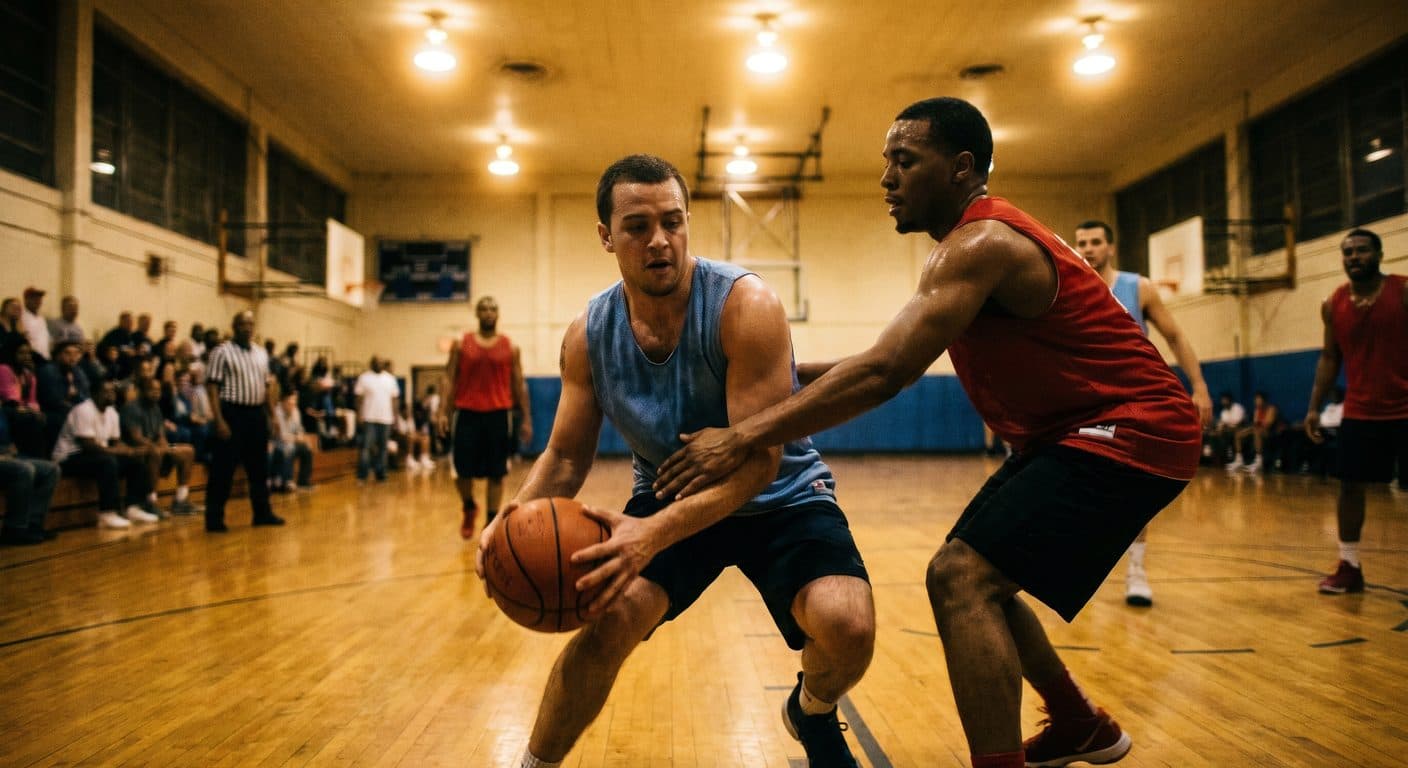
Turnovers: measure them by type to actually cut them
Turnover rate, A/TO ratio and classification: the numbers-first method to cut your turnovers
You can play 30 minutes, defend hard, rebound well, and still lose on preventable mistakes. On average, every turnover is worth 1 point handed to the opponent. A team committing 15 turnovers per game sacrifices 15% of its possessions without ever taking a shot. The problem isn't working harder, it's knowing which ones you commit, and why.
This guide doesn't give you another list of moves. It shows you how to measure your turnovers by type, read your turnover rate and your A/TO ratio, and turn those numbers into a targeted practice plan. For the technical side, the article on 7 techniques to reduce your turnovers is the direct companion, and the complete basketball stats guide places it all in the bigger picture.
You can't reduce what you don't measure
Most amateur players have no idea how many turnovers they commit per game. Even fewer know why.
Do you lose the ball more on bad passes or on the dribble? In transition or in the half-court? These two questions change your entire practice plan. Without data, you train blind and fix at random.
You don't improve what you don't measure. Mechanics can be drilled, but measurement tells you which move to drill first. Measure first, fix second.
Quick win: 2 numbers to log this weekend
After your next game, just log two things:
- The total — how many turnovers in all.
- The primary cause — bad pass, lost dribble, violation or poor decision.
It takes 60 seconds. This one habit forces you to observe your ball handling in real time, and a pattern surfaces by the 2nd or 3rd game.
Turnover rate: the stat that normalizes your losses
Turnover rate measures the percentage of your possessions that end in a turnover. It's the most honest indicator because it doesn't depend on playing time.
The math is simple:
Turnover rate = (turnovers / possessions) x 100
Here are the concrete benchmarks by level:
| Level | Target turnover rate | Read |
|---|---|---|
| Beginner | Under 20% | 1 in 5 possessions wasted, big upside |
| Regular player | Under 15% | Decent handling, needs proofing under pressure |
| Competitive (regional/national) | Under 10% | Strong ball control |
| NBA professional | 12 to 14% | High usage, so structurally higher rate |
A rate above 20% means 1 in 5 possessions never results in a shot. That's massive, and usually invisible without tracking.
A/TO ratio: your real ball-handling report card
The A/TO ratio (assists / turnovers) summarizes your ball-handling quality in one number. It tells you whether you create more than you waste.
Benchmarks by role:
| Profile | Target A/TO | Signal |
|---|---|---|
| Competitive point guard | > 2.5 | You organize without wasting, the reference |
| Decent point guard | 2.0 | Good create / risk balance |
| Other position | ≥ 1.0 | Acceptable, you don't weigh negatively |
| Red zone | < 0.5 | You do more harm than good, top priority |
Below 1.0, you commit as many turnovers as you create baskets for others. A tracking app like HoopsTrackR can help you visualize your A/TO ratio game by game without doing the math by hand.
Sort your turnovers into 4 types
Not all turnovers share the same cause or fix. Sort them into 4 families:
| Type | Example | Common cause |
|---|---|---|
| Bad pass | Pass intercepted | High-risk decision |
| Lost dribble | Ball stolen under pressure | Weak ball handling |
| Violation | Travel, out of bounds | Footwork to fix |
| Breakdown | 5 seconds, shot clock | Court reading to improve |
After 3 games, one type consistently dominates. Then you target that single problem for 2 weeks instead of spreading yourself thin.
5 drills sorted by turnover type
Each type has its fix. Pick the drill that attacks your dominant cause:
| Problem | Drill | Duration / reps |
|---|---|---|
| Bad pass under pressure | 3-on-2 no-dribble (-3 pts per turnover) | 10 min per session |
| Lost dribble | Cone drill with direction changes | 3 sets x 90 s |
| Weak ball handling | Crossover + between-the-legs combo | 5 min per session |
| Footwork / violation | Two-foot pivot from the low post | 3 sets x 8 reps |
| Poor decisions | Moving pass drill at high speed | 10 min per session |
Golden rule: drill passes in motion, never stationary. Static passing doesn't exist in real games.
The negative-points 3-on-2 drill
This is the most effective drill for forcing the right decision under pressure. The scoring system changes everything.
The setup:
- Format — 3 attackers vs 2 defenders, fast-break situation.
- Made basket — 1 point.
- Turnover — minus 3 points.
- Duration — 10 minutes, round after round.
The -3 penalty forces the brain to favor the simple pass over the spectacular one. In 3 sessions, bad-pass turnovers drop by 30 to 40%.
What the context of your turnovers reveals
The raw count isn't enough. The context of each turnover often says far more:
- Turnovers clustered late — fatigue or excessive risk-taking when the game is close.
- Turnovers concentrated in transition — you launch the offense before organizing it.
- More turnovers when guarded tight — pressure rattles you, work pivots and footwork.
Log the context, not just the count. Over 4 games, a clear pattern emerges and tells you exactly where to act.
Turnovers by position: the benchmarks
Your position changes what's acceptable. A point guard touches the ball more, so mechanically commits more turnovers:
| Position | Acceptable TO / game | Watch point |
|---|---|---|
| Point guard | 2 to 4 | High usage, aim for A/TO > 2.5 |
| Guard / wing | 1 to 3 | Mostly on drives |
| Big | 1 to 2 | Mostly travels and forced post passes |
Beyond 5 turnovers per game at any position, it's a clear signal to address first.
From numbers to action: linking measure and fix
Measuring is useless if you don't fix. Once your dominant type is identified, that's where technical work takes over.
You know you mostly lose it on bad passes? Pull the matching moves from the 7 techniques to reduce your turnovers. To log your turnovers game by game, the match sheet tool gives you a ready-made framework.
The loop is simple: you measure, you identify the dominant cause, you drill the move, you re-measure. Three cycles are often enough to see the total drop.
Frequently asked questions (FAQ)
How many turnovers is acceptable per game for an amateur?
Between 2 and 4 per game is solid at regional level. More than 5 is a clear signal to work on. Long-term goal: fewer than 3 per game.
What's the difference between turnover rate and turnover count?
Count depends on playing time. Turnover rate is normalized by possessions: it's the better stat for comparing two players who play different minutes.
Do turnovers really impact the result?
Yes. Each turnover is worth about 1 point conceded. If you commit 5 more than your opponent, you hand them 5 points before defense even factors in.
How do I reduce turnovers under defensive pressure?
Work footwork (pivot, post-up exit) and commit to the simple pass. A low-risk pass, even without a direct basket, keeps the possession alive.
Should I track turnovers in practice or only in games?
Both. Practice reveals the cause, games verify whether you fixed it. Tracking only in games gives you data without solutions.
To go further, combine this stats angle with the 7 techniques to reduce your turnovers and place it all back in the complete basketball stats guide.
Cutting your turnovers from 5 to 3 per game means 2 possessions kept, up to 4 points in a close game. You don't reduce your turnovers by thinking about them harder. You reduce them by counting them.
Passe au niveau supérieur avec HoopsTrackR
Tu as maintenant toutes les clés. Soyons honnêtes : noter ses stats à la main, c'est fastidieux. HoopsTrackR fait le calcul pour toi et te montre ta progression sur la durée.
You might also like

Offensive rebounding in basketball: score 8 extra points per game from second chances
Teams that crash the glass score 8 extra points per game in second chances. OREB%, 3 core techniques, 4 drills and a 4-week program to become a reliable offensive rebounder.

Improve Your Free Throws: From 60% to 80% in 6 Weeks
The free throw is the only fully controllable shot in basketball. The BEEF method, a pre-shot routine, 4 drills and a 6-week program to go from 60% to 80%.
Point guard: the key stats to track
Which basketball stats really matter for a point guard? A/TO ratio, usage rate, PPG vs APG, FG%… The dedicated guide for the 1 position with NBA and EuroLeague examples.