
Offensive rebounding in basketball: score 8 extra points per game from second chances
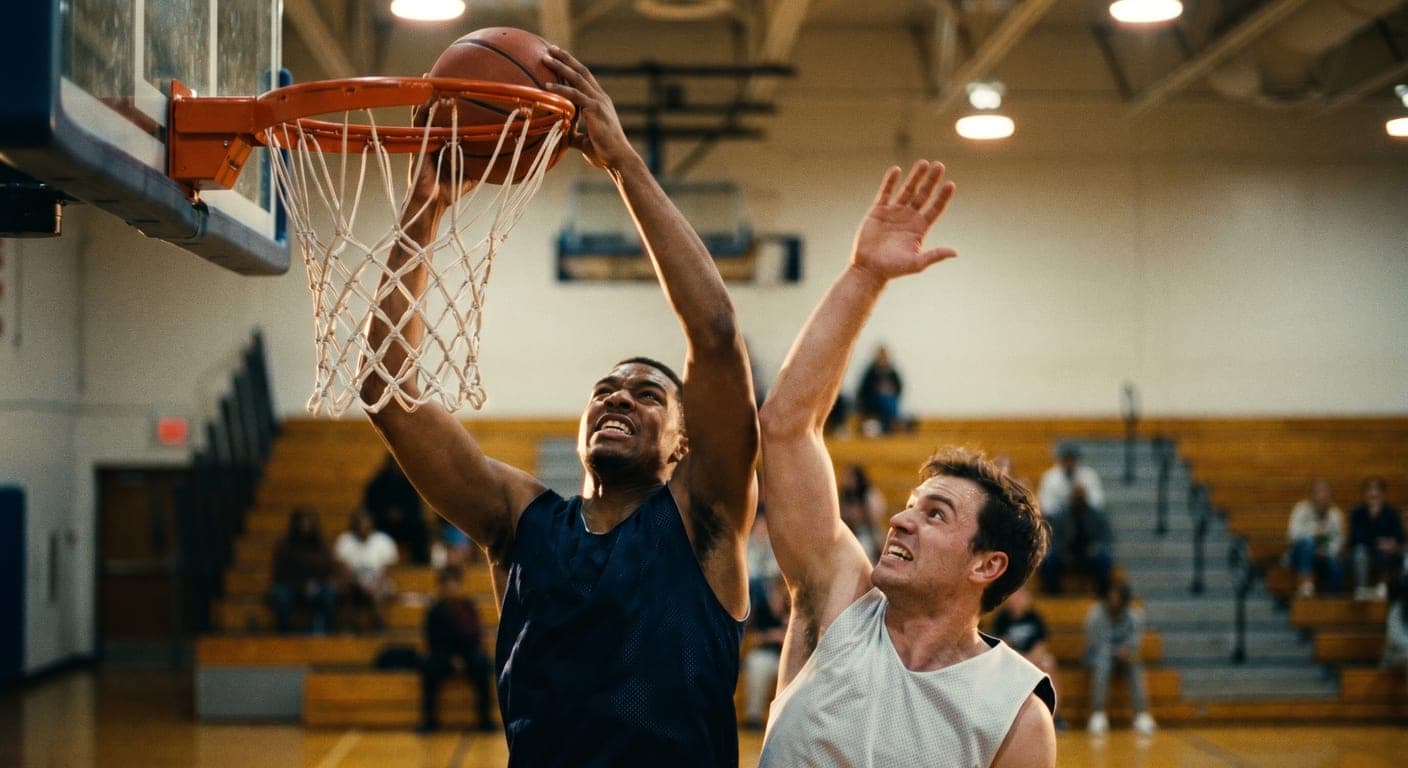
Offensive rebounding in basketball: score 8 extra points per game from second chances
OREB%, 3 techniques, 4 drills, 4-week program — the complete guide by position
"We play good defense but we still give up 8 second-chance points per game." You've heard that line in your locker room — or said it yourself. Offensive rebounding is the most underrated stat in amateur basketball — the one that separates teams that win close games from those that lose them at the buzzer. And you don't need to be tall or fast to dominate it.
This guide covers the mechanics of offensive rebounding, how to compute your OREB%, the 3 core techniques, 4 drills to integrate, a 4-week program and position-by-position placement — with a dedicated table and 5 frequently asked questions. By the end, you'll have a concrete plan to go from 1 to 3 offensive rebounds per game.
Why offensive rebounding changes game results
One offensive rebound equals one extra possession. One extra possession equals between 0.8 and 1.1 extra points on average. Multiply by 8 offensive rebounds per game and you get 8 points that don't exist for your opponent but that show up on your scoreboard.
NBA numbers confirm the impact: teams that win more than 30% of their offensive rebounding battles (OREB%) score an average of 8 more points per game compared to teams below 25%. In amateur basketball, where shooting percentages are lower and misses are more frequent, the impact is even bigger. The more shots your team misses, the more offensive rebounding becomes a goldmine.
About 30% of missed shots in amateur basketball become offensive rebounds, vs 22 to 28% at the pro level. The gap comes from 3 reasons: amateur defenders box out worse, amateur centers have weaker rebounding instincts, and refs whistle fewer paint contacts. Bottom line: there's an open window most amateur teams ignore.
The effect isn't only on the scoreboard. An offensive rebound also has a massive psychological effect: you've made the defense run in transition, they think they've recovered the ball, and you rip the hope away in one motion. After 4 or 5 offensive rebounds in a game, the opponent is mentally cooked. It's a stat that breaks morale on top of inflating your score.
To put this stat in the broader landscape of basketball indicators, check out our complete basketball stats guide. Offensive rebounding is one of Dean Oliver's Four Factors from Basketball on Paper — at the same level as field goal percentage, turnovers and free throws.
How to calculate your offensive rebounding percentage (OREB%)
OREB% measures what share of available offensive rebounds your team grabs. It's more precise than counting raw rebounds because it neutralizes pace and the number of missed shots.
Formula: OREB% = (Your team's offensive rebounds) / (Your team's offensive rebounds + Opponent's defensive rebounds) × 100
Concrete example: your team grabs 8 offensive rebounds during the game. The opponent grabs 22 defensive rebounds. OREB% = 8 / (8 + 22) × 100 = 26.7%. You're below average.
To benchmark your numbers against playing levels:
- Below 22% — your team isn't crashing. You leave 6 to 10 points per game on the floor. Top priority to fix.
- 22 to 28% — average. You do what's needed without going further. That's where most amateur teams sit.
- 28 to 35% — good rebounding team. You generate 3 to 6 second-chance points per game consistently. Clear edge over teams that don't crash.
- Above 35% — dominant team. You systematically turn misses into new attacks. Opponents take it on the chin mentally.
NBA average sits around 27%. The best amateur teams reach 35 to 40%. The difference rarely comes from height — it almost always comes from aggressiveness and timing.
To compute your personal OREB% (not just the team's), divide your offensive rebounds by the total offensive rebounds available while you were on the floor. An app like HoopsTrackR does this automatically from your minutes and the missed shots during your stints.
The 3 core techniques of offensive rebounding
Offensive rebounding isn't about luck or height. It's a learnable skill built on three technical pillars. Work on one pillar at a time — a rebounder fixing all 3 at once improves on none.
1. Read the shot trajectory
The key to offensive rebounding is anticipation. When your teammate shoots, watch the angle and speed of the ball. 70% of the rebound is decided before the ball touches the rim.
A few empirical rules to memorize:
- Shots from the wing or corner — tend to bounce to the opposite side. If the shot comes from the right wing, position yourself on the left side.
- Shots from the top of the key — often come up short, in front of the rim. Frontal positioning is optimal.
- Long-range shots (3-pointers) — bounce farther (up to 4-5 meters). Stay back, don't rush into the paint.
- Mid-range shots — short trajectory, the rebound stays close to the rim. Aggressive crash mandatory.
These patterns aren't absolute — they vary with ball spin — but they give you a 0.5-second reaction edge. At amateur level, that's huge.
2. Slip the box out
The defense tries to wedge between you and the basket to block your path to the rebound — that's the box out. Your job: get around that block before the defender sets position. The more positioned the defender is, the harder it gets; the earlier you attack, the easier it is.
Two-step technique: fake one direction, then go the other. The defender reacts to the fake with a weight shift, you slip behind them while they correct. Takes 0.3 seconds — enough to win the angle.
"Swim" variation: you raise one arm over the defender's shoulder like a swimmer, and you pivot your body around them. Very effective against defenders who push you with their arm.
"Spin" variation: you spin 180° as soon as you feel the defender's contact. You turn their box out into assistance — they give you the momentum to slip by. Takes practice but devastating once mastered.
3. Time your jump
Jump too early: you're already coming down when the ball arrives — you can't adjust. Jump too late: the ball has bounced away before you touch it. The right moment is when the ball contacts the rim or backboard.
Practical rule: wait until the ball touches the rim or backboard before you trigger your jump. At that moment, you have 0.4 to 0.6 seconds before the ball drops — exactly what you need to elevate and adjust.
Also keep in mind: a short, well-timed jump beats a high, mistimed jump. Raw vertical matters less than anticipation. Many great amateur rebounders are 5'11" to 6'1" — they win with timing, not wingspan.
How to read the shooter and anticipate the trajectory
Beyond the shot angle, your best clue comes from the shooter themselves. Every shooter has a signature: a follow-through, a wrist rotation, a rhythm. Learn to read those signals and you take a 1-second jump on everyone else.
Signals to watch on your teammate:
- Wrist rotation at release — a flicked wrist gives a short shot that comes up front. A stiff wrist gives a long shot that travels far.
- Release height — a high release gives an arcing trajectory that bounces high. A flat release gives a tighter, more unpredictable bounce.
- Shooter's balance — an off-balance shooter usually misses short or long. Not lateral. Focus on the direct line of the basket.
- Catch and shoot vs pull-up — pull-ups miss short more often (tired legs). Catch and shoots miss laterally more often.
Knowing your teammates is a competitive edge. Over 30 games you learn that #10 always shoots short from the corner. You position accordingly. Invisible to the opponent, devastating for you.
For opponent shots (defensive rebounds, off-topic here but transferable), the same principle applies in reverse: observe patterns over 5 minutes, adjust your placement.
The mindset of an offensive rebounder: persistence above all
Technique matters, mindset matters more. The best offensive rebounders don't have the best vertical — they have the best stubbornness. Out of 100 missed shots, they crash 100 times. Out of 100 crashes, they win 30 times. Out of 30 wins, they convert 25 to points. The ratio is harsh, the payoff is huge.
Three mental principles to internalize:
- Crash on every shot, no exception — even when you know you won't get the rebound, your presence forces the defender to react and creates micro-windows for your teammates.
- Ignore the result of the shot — don't watch whether the ball goes in or not. Keep crashing. If it goes in, you reset. If you hesitate, you miss.
- Accept the contact — offensive rebounding is a body game. If you avoid contact, you miss. Plant yourself, take the hit, take the ball.
Amateur offensive rebounders retreat on average 40% of the time after a shot, for transition defense. Good rebounders retreat less than 10% of the time. The difference isn't technique: it's the decision to crash.
This stat is also tied to fatigue. Late in the game, everyone is tired — but the player who keeps crashing grabs the decisive rebounds. Train your conditioning specifically so you can crash 100% of possessions without burning out.
4 drills to improve in 4 weeks
Four drills to integrate into your practices. Each targets a specific aspect. Combined, they transform your offensive rebounding in 4 weeks.
1. Tip Drill (10 minutes)
Stand under the basket. Throw the ball against the backboard and tip it back against the board with your hand, without letting it touch the floor. 3 sets of 10 reps with the strong hand, then 3 sets of 10 with the weak hand.
Builds timing, touch, and explosive reach at the rim. It's Dennis Rodman's favorite drill — widely considered the greatest rebounder of all time. He reportedly did it daily for 14 NBA seasons.
2. 1v1 Rebounding Competition (10 minutes)
One player shoots from mid-range. The offensive player crashes, the defender boxes out. Who gets the rebound? 20 reps. Score it: +1 for the offensive player who grabs the rebound, +1 for the defender who prevents it.
Target for the offensive player: win 40% of rebounds in week 1, 55% by week 4. If you don't reach 40% in week 1, work on jump timing. If you plateau at 50%, work on the slip technique (point 2 above).
3. Rebounding Triangle (15 minutes)
Three players position themselves at 3 different spots around the paint: strong-side, weak-side, top. The coach (or a teammate) intentionally misses from various positions. The 3 players read the trajectory and crash to the most likely rebound spot.
Builds collective reading and coordinated placement. This is the drill that takes you out of individual rebounding and into systemic team rebounding. After 4 weeks, you'll notice clear improvement in non-verbal communication.
4. Fatigue Rebounding (10 minutes)
20-meter sprint round trip, then 1v1 competition for a rebound. 10 reps. Simulates the late-game conditions where your legs are heavy and your focus drops.
It's the hardest drill. It also creates the biggest in-game difference. Rebounders who train under fatigue grab 2 to 3 extra offensive rebounds in the 4th quarter compared to those who only train fresh.
4-week program to go from 1 to 3 OREB per game
Here's a concrete plan, calibrated for an amateur player who practices 2 to 3 times per week. This progression assumes regular practice and a journal to track your numbers.
| Week | Technical focus | Priority drills | OREB target/game | Team OREB% goal |
|---|---|---|---|---|
| 1 — Baseline | Measure your starting point | Tip Drill (3x/week) + Triangle (1x/week) | 1 to 2 | 22% |
| 2 — Trajectory reading | Anticipate the rebound angle | Triangle + game video review | 2 | 25% |
| 3 — Slip technique | Beat the box out | 1v1 rebound (3x/week) + Tip Drill | 2 to 3 | 28% |
| 4 — Pressure and fatigue | Crash late in the game | Fatigue Rebounding (3x/week) + 1v1 | 3 | 30%+ |
The classic trap: jumping from one week to the next without truly measuring. Log your offensive rebounds after every game in a notebook or in HoopsTrackR. Without a baseline, you don't know whether you're improving or stagnating.
If by week 4 you plateau at 1 or 2 rebounds, don't move to a new program — restart week 1 with video footage of yourself in a game. You'll find 1 recurring mistake (timing, slip, or anticipation) that you'll fix in 2 sessions.
Where to position yourself by position
Your starting position determines 70% of your ability to grab an offensive rebound. The best technique in the world is useless if you start from the wrong spot.
| Position | Crash zone | Timing | OREB target/game |
|---|---|---|---|
| Point Guard (PG) | Perimeter, long rebounds | Stay high for transition balance | 0 to 1 |
| Shooting Guard (SG) | Weak-side wing | Cut toward the paint as the shot goes up | 1 to 2 |
| Small Forward (SF) | Corner or strong-side wing | Aggressive crash based on trajectory | 1 to 2 |
| Power Forward (PF) | Strong-side low post | Immediate box out and crash | 2 to 4 |
| Center (C) | Weak-side low post | Dominant position under the rim | 3 to 5 |
Note for point guards: don't feel obligated to crash on every shot. A guard who breaks for transition after every miss adds 0.5 fast-break baskets per game to the team. Your role is to protect the balance, not force the rebound. Unless emergency situation (late game, blatant mismatch).
Note for centers: your personal OREB% should exceed 10%. If you're at 5-7%, you're not crashing enough or losing your positioning duels. Watch your video: the issue usually comes from initial contact with the defender.
For wings (SF and SG), the key is the cut at the right moment. Cut too early and your defender follows you and boxes you out. Cut too late and the rebound is already gone. Ideal: trigger your cut as the shooter loads up, not before, not after.
Common mistakes that cost you offensive rebounds
Six recurring mistakes in amateur play. Eliminate just two of them and you'll double your offensive rebounds in a month.
Automatically retreating after every shot. It's the defensive transition reflex. But if you back up on every shot, you leave 30% of your possessions on the floor. Adopt the reverse rule: crash on every shot, unless your coach gives an explicit signal ("Get back!").
Watching the shot instead of reading the rebound. Everyone looks to see if it goes in. Good rebounders watch the defender and anticipate the trajectory. The shot is secondary: the potential rebound matters more.
Jumping too early. You burn your vertical before the ball arrives. Wait for ball-rim or ball-backboard contact to trigger your jump.
Going for the rebound with one hand. A one-handed grab turns into a lost ball one in three times. Go with two hands, body solid, elbows out. If you can, "yell" — a vocal command at the catch locks the ball in your hands and signals teammates that it's yours.
Crashing in a straight line to the rim. The defender sees you coming. Crash on a curved path, from the weak side, or with a spin. A curved trajectory gives you 0.5 seconds of advantage and better angles.
Giving up after one failure. You miss the first rebound, you get discouraged, you walk. Good rebounders grab their 2nd or 3rd rebound of the game within 30 seconds of a failure because they stay in the sequence. Don't check out mentally.
A stat-tracking app like HoopsTrackR can help you log your offensive rebounds after every game and visualize your progress week by week. Without data, you don't know if you're improving or stagnating — and you correct the wrong things.
The 5 legends of offensive rebounding and what they teach you
The greatest offensive rebounders in history aren't the tallest or most athletic players. Each developed a unique signature. Study them, copy what works, ignore the rest.
Dennis Rodman (NBA, 1986–2000) — 6'7", the smallest dominant rebounder in history. His signature: trajectory reading before the shot. Rodman studied opposing shooters for hours of film. He knew every shooter's average rebound angle. His regular season peak: 5.6 OREB/game in 1991-92, with games as high as 11. Lesson: mental prep beats raw height.
Moses Malone (NBA, 1974–1995) — the modern inventor of "second effort". Known for 5.3 OREB/game career average, and for his line: "Fo', Fo', Fo'" (his prediction of a playoff sweep in 1983, which he hit by one game). His secret: he went to the rebound 3 times per possession if the ball was loose. Not one rebound, several. Lesson: persistence beats solo technique.
Kevin Love (NBA, 2008–2025) — archetype of the modern rebounder with sharp statistical reading. Love analyzed his teammates' shot patterns and positioned himself based on each individual signature. His career-high: 31 rebounds in one game in 2010, including 9 offensive. Lesson: data and video analysis add 1-2 rebounds per game on top of technique.
Andre Drummond (NBA, 2012–) — best OREB% of the past decade. At 6'10" and 280 lbs, he plays timing and mass, not vertical. His signature: he always waits for the shooter to load before moving. No early fake. Absolute patience. Lesson: trigger timing matters as much as jump timing.
Bill Russell (NBA, 1956–1969) — most efficient rebounder in NBA history by percentage. 22.5 rebounds/game career average, in an era when OREB wasn't even split from DREB. His technique: systemic placement. He always stayed weak-side of the shot, knowing roughly 60% of rebounds land there. Lesson: statistical placement beats raw instinct.
If you keep one lesson out of the 5: preparation predicts the rebound. All five read shooters, studied angles, and arrived at the optimal position before others. The rebound is won in the invisible work, not the visible jump.
How the modern game is changing offensive rebounding
2025 basketball isn't 2005 basketball. Spacing, the 3-point shot and fast transitions have reshaped the offensive rebound equation. If you play by outdated rules, you miss obvious opportunities.
The 3-point shot dominates. In the NBA, 40% of shots are 3-pointers. In amateur basketball, we're at 25-30%, but the trend is rising. Direct consequence: rebounds bounce farther (4 to 6 meters from the rim), often beyond the paint. The modern rebounder doesn't camp under the rim — they anticipate the long rebound.
Spacing creates highways. Stretched defenses leave huge gaps in the restricted area. If you're a wing or center, you can enter the paint through a near-empty corridor — defenders are busy guarding perimeter shooters. Take advantage: crash on a diagonal trajectory.
Opponent transition is faster. Modern teams run as soon as they recover the ball. If you crash badly and the opponent grabs the defensive rebound, you offer them a 3-on-2 fast break. Conclusion: crash knowing your teammate staying back must read perfectly. The classic "3 go to the glass, 2 retreat" rule has become "2 or 3 go to the glass depending on the shot".
Centers shoot 3s. Playing center? You also shoot 3s. When you take your shot, who crashes? That question reshaped the modern power forward role: they crash more than ever because centers are out at the arc. If you're PF, your offensive rebound volume should rise by 1-2 per game in the modern game.
Adapt your reading to the context. Play by team feel, not by a rigid 15-year-old textbook.
How to track your progress and read the patterns
Tracking offensive rebounds is more than logging a number. It's reading the patterns that show you where to improve. Three metrics to follow, each tells a different story.
- OREB per game — the raw metric. Measures direct contribution.
- OREB per minute — neutralizes playing time. More relevant if your coach rotates the bench.
- OREB% (rebounds taken / available rebounds while you were on the floor) — the true efficiency measure. Independent of pace and minutes.
Track these 3 numbers over 10 consecutive games minimum before drawing conclusions. Below that, statistical noise dominates. Over 10 games, your average becomes reliable.
Look for patterns by game type: home vs away, strong opponent vs weak, tall direct defender vs short. You may discover that you grab 4 rebounds at home but only 1 on the road — a mental signal, not a technical one. Or that you dominate against short centers but disappear against tall ones — a technical adjustment signal.
To go further on progression measurement, read the 12-month basketball progression guide and the Plus/Minus guide that complements the analysis of your real impact on the score.
Frequently asked questions (FAQ)
How many offensive rebounds per game is considered good?
For a power forward or center, 3 to 5 offensive rebounds per game is a solid level. For a guard or small forward, 1 to 2 is enough to add real value. The key thing: improve relative to your own starting point, not chase an absolute number.
Is offensive rebounding dangerous?
Paint contact can be intense, but serious injuries are rare with proper technique: bent legs, elbows at shoulder height, low body. Injuries usually come from poor posture or a badly controlled landing, not from contact itself.
How do I know if my team is good at offensive rebounding?
Calculate your OREB% over 5 consecutive games. Above 28%, you're in the good range. Above 35%, you dominate and probably generate 6 to 10 second-chance points per game. Below 22%, it's a top priority.
Is offensive rebounding relevant for all positions?
Not at the same intensity. Centers and power forwards are the main crashers (2 to 5 OREB/game). Point guards usually stay back to balance transition. But any position can contribute 1 offensive rebound per game by reading the trajectory well.
How do I track my offensive rebounds over time?
Log your offensive rebounds after every game. Compare week by week over 10 games minimum. Look for improvement over 4 weeks, not game to game. HoopsTrackR does it automatically and computes your OREB% from your minutes.
To go further on the other Four Factors identified by Dean Oliver, check out our turnover guide and the FG% calculation guide. You'll find the same philosophy: measure, identify the lever, fix, verify.
You can score 8 more points per game without improving your shooting or your speed. You just need to crash the glass where nobody else goes. The best rebounders aren't taller or faster — they're just more stubborn. Start tonight: count your offensive rebounds, set yourself a target of 3 per game, and build that reputation as the player who never quits on a possession.
Take it to the next level with HoopsTrackR
You now have all the keys. Let's be honest: tracking stats by hand is tedious. HoopsTrackR runs the math for you and shows your progress over time.
Vous aimerez aussi
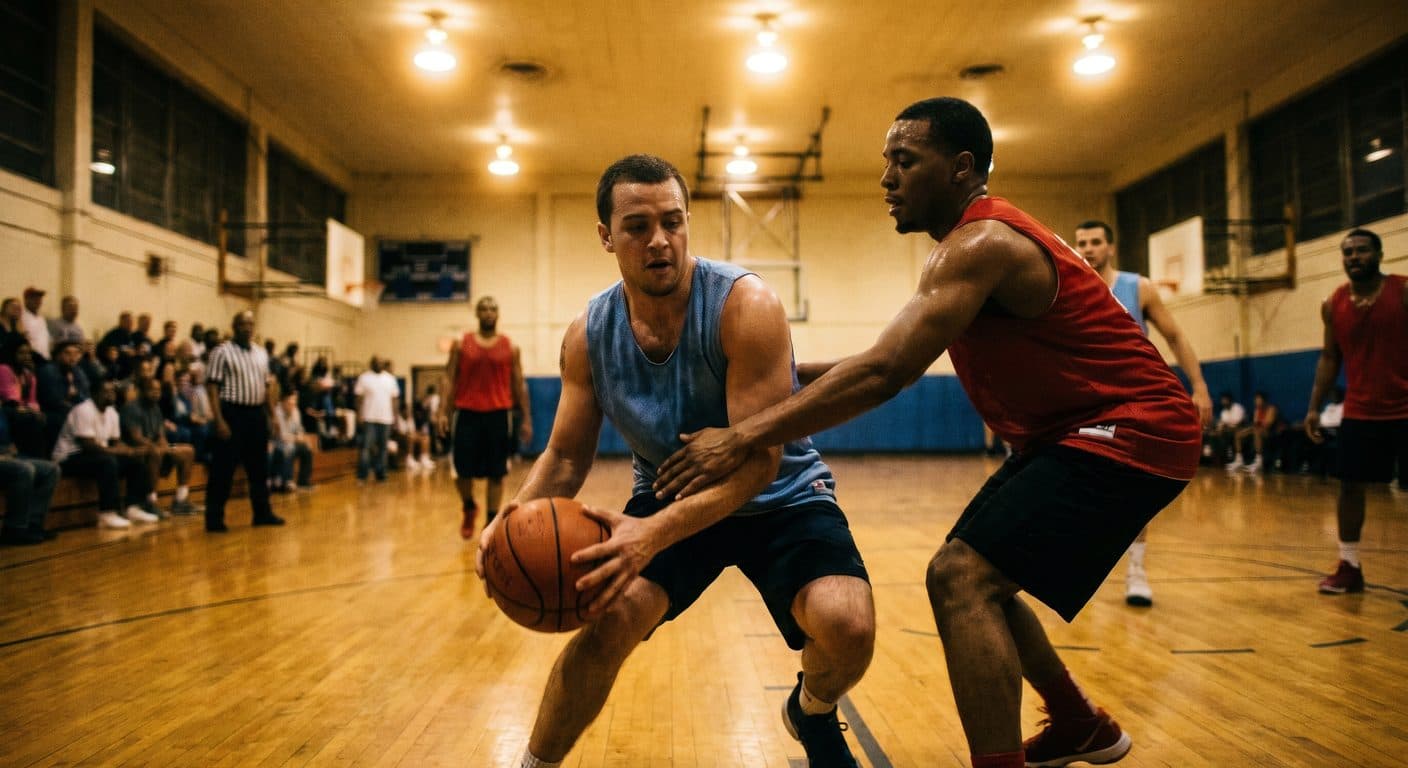
How to Reduce Basketball Turnovers with Stats Tracking
Every turnover costs about 1 point. Learn to measure your turnovers by type, turnover rate and A/TO ratio to target the real cause.
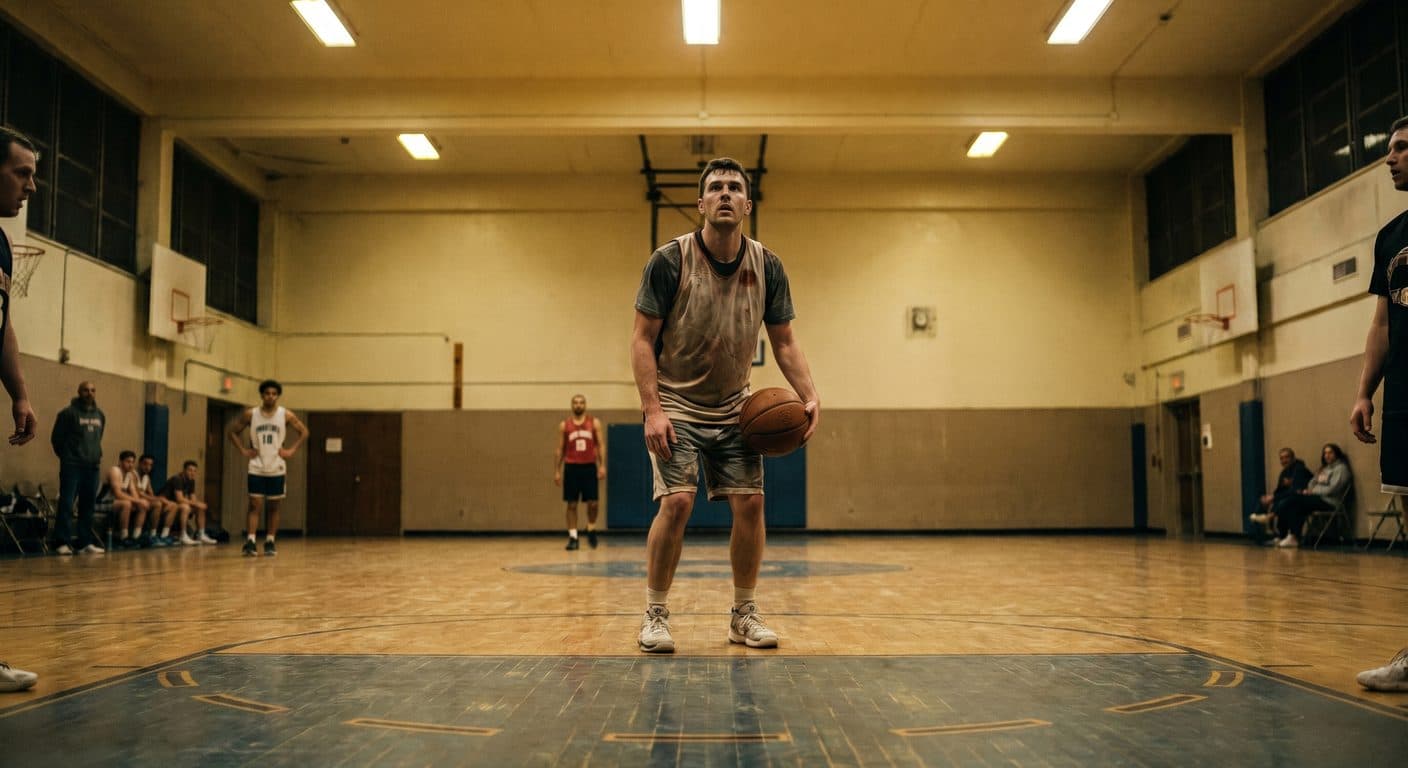
Improve Your Free Throws: From 60% to 80% in 6 Weeks
The free throw is the only fully controllable shot in basketball. The BEEF method, a pre-shot routine, 4 drills and a 6-week program to go from 60% to 80%.
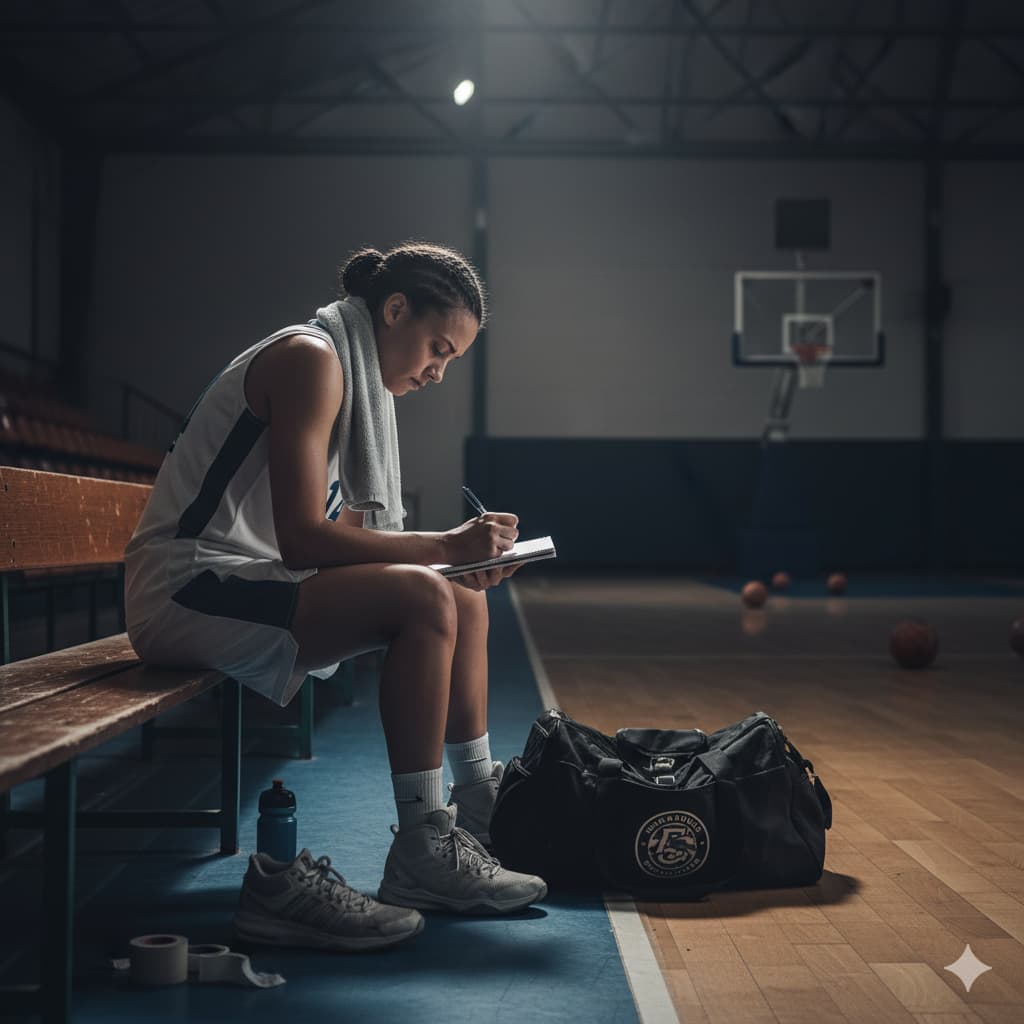
How to Analyze Your Performance After a Basketball Game
Discover the complete method to analyze your performance after every game: the 5 essential questions to ask yourself, the 7 key stats to track, and how to turn your observations into a concrete improvement plan. Inspired by the best players and coaches.